
Opinion: Enhancing the Public Benefit of Privately Owned Public Spaces
A recent incident at Guastavino’s, a luxury event venue in Manhattan, illustrates the challenges associated with privatized public space in New York City.
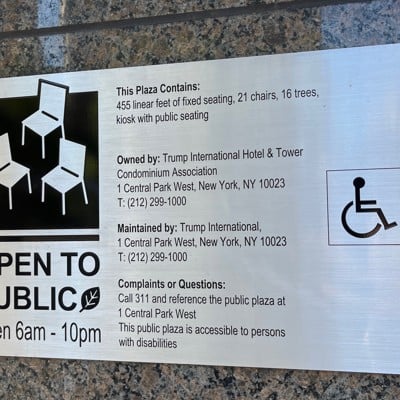
A recent incident at Guastavino’s, a luxury event venue in Manhattan, illustrates the challenges associated with privatized public space in New York City. The venue claimed city-owned land at its entrance as private property, posting a ‘Private Property’ sign and utilizing security measures to limit public access. It took efforts from advocates and legal action to ensure public access was reinstated.
During a visit to various privately owned public spaces (POPS) when I was in eighth grade, I discovered a mix of well-utilized and poorly designed spaces. While New York City has over 590 POPS legally obligated to remain open to the public, many are uninviting, and some are effectively privatized. For example, Trump’s International Hotel & Tower restricted public access to its plaza for over three years. The rules governing POPS have grown more stringent; however, enforcement remains a challenge. Increasing fines for violators and allowing owners of non-functional spaces to remove their obligations could improve these areas. As a high school student, I rely on accessible public spaces, and it is crucial that these places are not just on paper but are truly welcoming and functional for all New Yorkers.



Comments
No comments yet.